Most water problems in a Des Moines home start outside, not in the basement. Before you buy, look at where the downspouts empty, which way the ground slopes, and what the basement floor and walls are quietly telling you, then ask the sellers directly about water history.
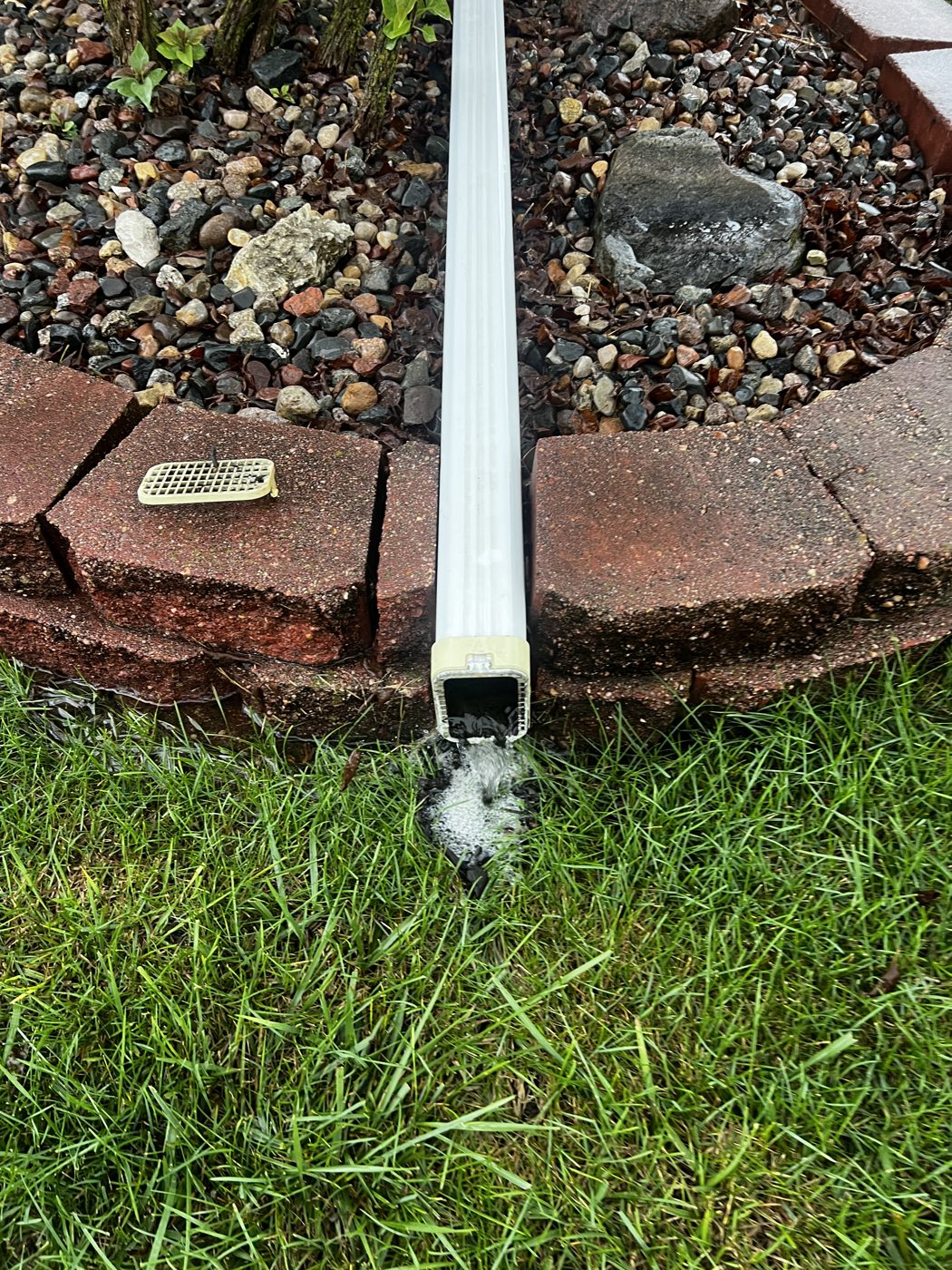
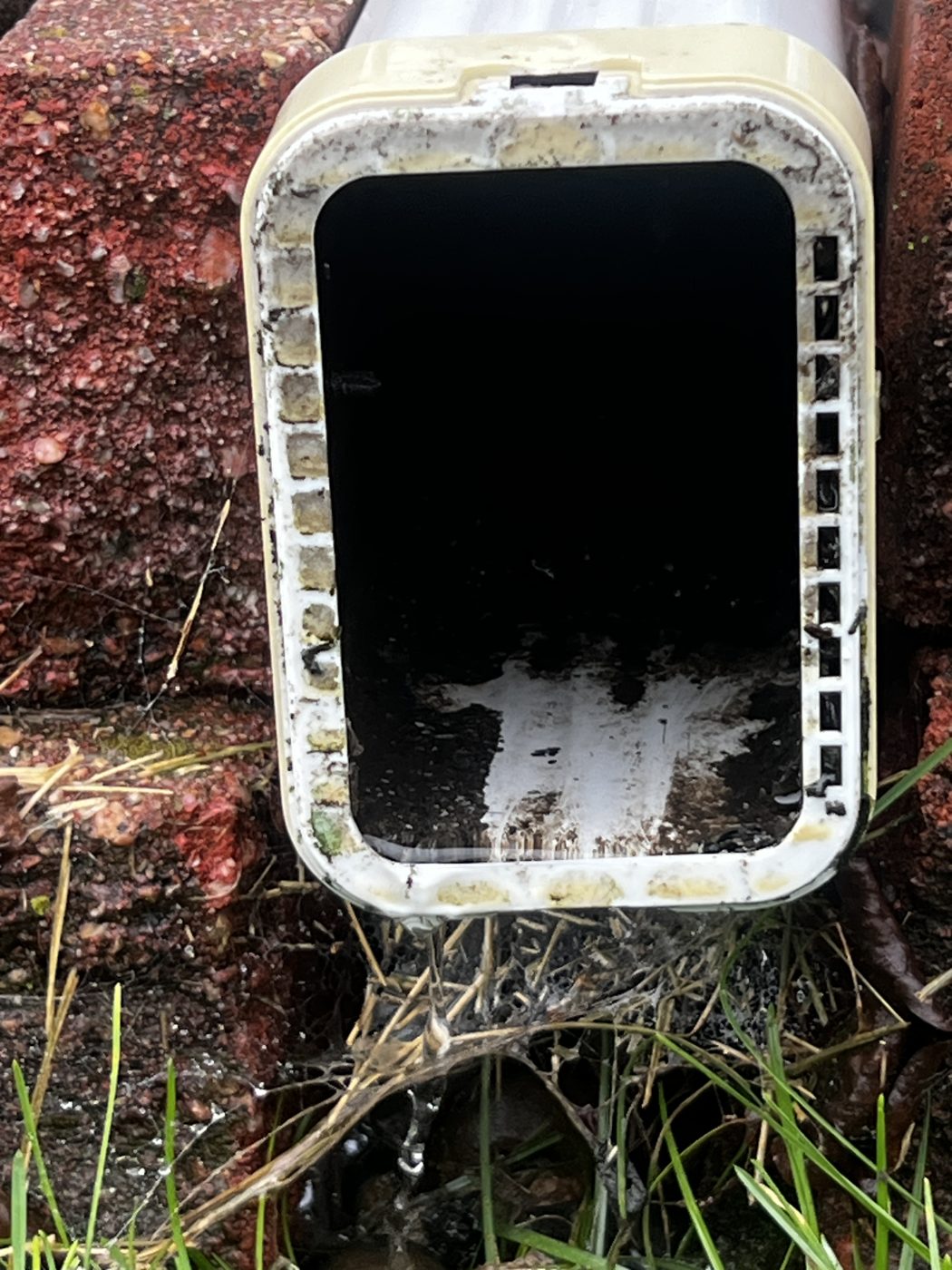
This is a downspout I found on a walk-around this fall. From the street it looks fine. Look inside and it is packed solid, so in a heavy rain the water backs up, spills over the gutter, and lands right against the foundation. Not the most glamorous photo I have ever taken, but it is exactly the kind of thing I want a buyer to see before they own it.
This September was one of the wettest Des Moines has seen in decades, which makes this fall a great time to look, because water leaves evidence. Here is what I check: downspouts that end at the foundation instead of 4 to 6 feet out, mulch beds that slope toward the house, white chalky lines or tide marks on basement walls, fresh paint on just one section of the basement, a sump pump that runs constantly or has no backup, and a musty smell a candle is working very hard to cover.
Here is the trade-off: cosmetic fix versus root cause. A $15 downspout extension and a little fill dirt is one of the cheapest repairs in homeownership. Active seepage through a cracked wall is not. Inspections are information tools, not perfection checklists, so the goal is to separate the $15 problem from the $15,000 one.
What I typically see in Des Moines is that older neighborhoods with mature trees and original gutters carry the most drainage issues, and most of them are maintenance, not structure. The houses that get into real trouble are the ones where someone painted over the evidence instead of fixing the cause.
As one example, a buyer looking at a 1950s home on the south side might see a dry basement on a sunny showing day. Then the inspector finds tide marks behind the furnace and a downspout draining straight down the wall. That is usually a gutter cleaning, two extensions, and some grading, a few hundred dollars. If the inspector also finds horizontal cracking with visible movement, that becomes a structural engineer conversation, and it gets negotiated or you walk.
If you want the full inspection playbook, including what is normal wear and what is worth negotiating, my Buyer Encyclopedia covers it.
Related Resources: How Much Are Property Taxes on a Des Moines Home, and How Do I Estimate Them Before I Buy? and Is an Older Home a Smart First Purchase in Des Moines?.
Want the metro’s first-time-buyer and market moves in your inbox? Join my newsletter here.
Written by Jason Huffey, REALTOR with RE/MAX Revolution (License S73436000), serving Des Moines and the greater Des Moines metro. Call or text (515) 606-1227. The Best Is Yet To Come.